Wednesday, April 11, 2012

Three Fish: Two Cool, One Warm

Flaming Blue Water: 2 1/2 Versions


The Problem with Public Education

     Over the past three or four decades politicians, intellectuals, educators, and the like tried to solve the ills of public education. And so the quest continues. More experimentation. More blame. More calls for change. And more nasty stuff thrown at the wall to see if it sticks. Has anyone gotten the correct answer to obvious question? What is the problem with public education? If you don't get the answer right, you certainly will not see any improvement. After reading chapter three of Goodwin’s “Simply Better”, my suspicions have been confirmed. The problem with public education is the public. Simple but true. Twenty plus years of teaching in the inner city has demonstrated to me that education is in the condition it is in due to the current condition the public is in…specifically, the family. The break-up of the family, the building block of society, is broken all over the country to some degree and certainly the effects are compounded in the city. If I can find a two-parent family, it's a rarity and very pleasantly noticeable. We know the problem (unhealthy broken families) and the answer to that brokenness is not within our power to remedy. Yet, we can attempt to fill the gap that the broken family has left. Simply Better is on the right track. I’ve seen the movie, The Blind Side and the solution was the family. That family rescued him, nurtured and loved him, fed and clothed him and gave him a bed and a place to grow. Hodgkinson’s 13 risk factors associated with lower student achievement are seen by me on a daily basis. Yet, Goodwin quotes Rothstein, ”Good teachers alone, for most children, cannot fully compensate for the disadvantages many children bring to school.” Then how does the teacher effect change? Short of taking children away from parents, early childhood programs are the answer. Teaching children social skills (negotiation and compromise) and giving them exposure to things they would not otherwise not know, will change lives and futures. Additionally, teaching children to read will not only transform their lives, it will rescue them from a life of poverty and hopelessness. This is the ounce of prevention approach. Knowing that many critical brain functions and processes take root before the age of five and implementing strategies to heighten those critical brain functions; this can have a major effect on many children.
     Exposure creates background. Children need prior knowledge to achieve. My field trip to the High Museum was canceled due to the exhaustive testing of the third, fourth, and fifth grade. No exposure for these inner city 5th graders. This exposure thing must be a top down agenda and thought of as important. Now it's up to me to bring the High to the fifth graders. I wonder if the High will allow me video the show?
     Goodwin mentions something that I will attend to. Being moved around from school to school and then pushing a cart around affords me little in the way of word walls. Now that I have my room back I can bring out that packed away art word wall that I created. If I can't find the rolled up alphabetized four foot by eight foot chart I will certainly make a new one. I have one on a window shade, yet I want one that always displays the words all the time for viewing and perusing. I do want words to be pegs, as Beecher says, for students to hang ideas on. One word I use constantly is appropriate. It demonstrates the uniqueness of art and answers the whinny complaint children use, “He’s copying me!” No he’s not, he is appropriating it; which means take and use for your own. In art you are allowed to take another's idea, change it and use it for your own. I will intentionally weave vocabulary into my art instruction. The five step process for direct vocabulary instruction is a winner. A living vocabulary is a crafty way for children to take what they have learned with them where ever life takes them. This is a legacy of sorts for teachers; to impart knowledge, through words, in unforgettable ways.
     Another topic Goodwin covers is interest and motivation. I think we can work too hard instructing children. There is a place for play in instruction. I use it as much as I can. Play greases the instructional wheels. This is where interest and motivation comes into the picture. Capture their interest and you've done half the work. That's a chapter out of Kay Toliver's book.
     Goodwin is correct, “Unless educators act proactively rather than reactively, they will remain in a perpetual state of emergency.” Sounds like a correct assessment of the current educational dilemma. We know the diagnosis, now to implement the plan. We cannot put the family back together, yet we can transfer knowledge and motivation into those we teach in hopes the cycle will not repeat.

First Black Splash

UbD and DI An Essential Partnership

     Working smarter rather than harder is always a good idea. When time is limited, and it most certainly is, it’s necessary to be efficient as possible. Technology assists with promoting educational efficiency and I’m glad Tomlinson and McTighe included this point as axiom 6. National Board Standard #2 and Tomlinson chime together on this axiom by pointing out that teachers must address the diverse academic levels within their classrooms and use their specialized instructional acumen and rich understanding (NBS #2) to vary approaches to meet student needs. NBS #2 in part, states, “Teachers know the subject they teach and how to teach the subject to students.” Technology and collaboration (axiom 6) effectively combined can fulfill NBS #2 and successfully “teach the subject to students.” Tracking student progress via technological methodologies provides learners with feedback necessary for success and provides educators the input they need to teach the varied learner population within their purview the skills they needed for achievement. Axiom #7 continues this approach, suggesting that Understanding by Design (UbD) is not a program, rather a way of thinking; meaning educators are in the business of adapting instruction rather than the implementation of a one-size-fits-all program. As Tomlinson points out, a fluid, not static, approach to differentiation will maximize outcomes (knowledge, understanding, skill-sets) because it considers the teaching variables of who, where, how, and what. Technology can effectively handle these variables and provide teachers with a stockpile of engaging strategies and enriching content to effectively share their deep knowledge ( rich understanding , NBS #2) and propel students to success.
     A program known as “The Khan Academy” successfully blends this kind of differentiation with technology. Instructors know exactly the skill level of each student as they complete computer-based assignments and assessments. Via immediate, live, real-time feedback the instructor can identify problems and assist students; differentiating to compel understanding. Due to technological advances, this process could not have taken place 5-10 years ago. Although this Khan Academy technology is not present in my classroom, I can implement the old standby…observation and then differentiate where needed. Yes, I do use the technology available to me; LCD projector, video, and PowerPoint presentations to effectively and efficiently instruct my students. This is an improvement over the slow, 20 th century, “let me find my visual aide somewhere in the cabinet” approach that is neither fluid nor responsive to student needs. I can collaborate with colleagues and modify my presentation to differentiate instruction with a couple mouse clicks. I update my media to accommodate learning needs. Sometimes, perhaps most of the time, students do not understand due to physical sight. They just cannot see the lesson. Using a video camera to deliver “live” demonstrations, which is projected onto a large screen for student observation in conjunction with personal “hands-on” differentiated assistance for those in need, in most cases is sufficient to transfer comprehension and deliver a skill-set. An example can be noted. Second grade weaving, with the use of this fluid technological differentiation process took students from 10% success at the onset of the unit to over 90% success at its conclusion. I was excited at their success and so were the students!

Tomlinson, C. A., & McTighe, J. (2006). Integrating differentiated instruction and understanding by design: connecting content and kids. Alexandria, VA: Association for Supervision and Curriculum Development.

Tuesday, November 29, 2011

Brain-Based Teaching In The Digital Age, by Marilee Sprenger


Sprenger, M. (2010). Brain-based teaching in the digital age. Alexandria, Virginia: ASCD.

Chapter 8, 9, & 10 Review 
     Sprenger is convinced that music in the classroom benefits learning, self-esteem, and rapport. She lists research that demonstrates this to be true and establishes through science the effectiveness of music on teaching and learning. The alpha wave, induced by baroque period music can assist teachers with the transference of knowledge and skills, therefore boosting achievement. As the National Board Professional Teaching Standard number four (NBPTS #4) states, educators should “seek to expand their repertoire” and by placing in their educational toolbox this alpha wave strategy, teachers will gain instructional influence and increase outcomes just by influencing classroom ambiance through alpha wave technology…baroque music. Additional methods in which educators can fulfill NBPTS #4 links music to memory and recall, mind maps, visualization, and memory improvement. Music and memory are in close proximity in the brain and when music is employed, emotions are attached to that information resulting in recall and memory enhancement. The Net (network) generation can process and acquire information better with the use of visual imagery and mind maps, which are representations…symbols of content that give students the capability to rapidly and effortlessly envisage the material being shared. Visualization (pictorial superiority effect) boosts memory over verbal instructional methodologies by 55 percent, therefore assisting students to visualize and mind map will increase comprehension in demonstrably effective ways. Understanding how memory works will allow educators to help students improve recall, command, and intellectual capacity. Sprenger lists five types of memory (semantic, episodic, procedural, automatic, emotional) and strategies for each memory type to assist the instructor to elevate their students to higher levels of achievement. It would be wise for any educator thinking about and striving for professional improvement to critically examine their own practice, sharpen their judgment, and adapt their instruction as NBPTS #4 states with these brain-based, mind-altering improvement practices.

Chapter 8, 9, & 10 Review 
     Unleashing the power of the brain is a major task of every teacher. What strategies can the teacher employ to accomplish this task? Brain-Based Teaching provides a road map for educators to follow and improve their own practice (NBPTS #4). Music can be used to influence learning and manage the classroom. I have played and will continue to play calm music, certainly from but not limited to the baroque period, to assist with comprehension and classroom management. Now, if any student, administrator or observer asks why I am playing music, I have a researched based answer! I am listening to alpha wave inducing music as I write! Some application points to these three chapters I have already employed. I have transferred most of my lessons to power point. This visual mind map process allows me to teach more effectively, enhancing my own professional practices (NBPTS #4) and allows for fluid changes in instruction, equivalent to providing for quick feedback depending upon instructional needs and outcomes such as remediation or differentiation. The functions of these power point presentations are to follow Sprenger’s strategies for triggering memory. Yet, presentations cannot alone address the five types of memory outlined on page 123. I must pursue other mind engaging activities such as manipulatives, limericks, puppets, songs, and metaphors to access a child’s memory and impart to them the skills and knowledge they need to be happy and successful whatever path their life may take.

Monday, September 19, 2011

LMU Reflection #2 September 2011


Greetings,

     Another Saturday class has come and gone. This time next year it will all be over. Thinking about the inevitable results...acquiring the Eds. Degree...a delayed gratification of sorts, will push me and others to complete each class and assignment with interest and vigor.
     One month is a long time to be away from LMU instruction. Getting back to the swing of things and discussion time is an injection of energy into us teachers. Dr. D's “monologue” is rather informative and thought provoking. He is using his experience and knowledge to inform and educate. His opinions are certainly his opinions, yet they are informed by experience and time (without time you have no experience) as well as knowledge and skillful humorous articulation.
     Thank you for being a good sport when called on during our presentation. Being an active, rather than a passive observer inflicts participation in ways that otherwise would not be available. The prize offered without your expressed permission was, I thought, not so desirable, in leu of your motorcycle accident escapades. The motorcycle prize ride with our professor might be as desirable as a hunting excursion with former vice-president Cheney. One doesn’t know if they will survive the experience. Once again, thank you. Your good nature supplied an extra dose of presentation energy for your group.
     Group chapter presentations are an interesting approach to review our current book. This method brings an in-depth survey to a book that would not happen with a regular/one-person read. I would like an online view of the presentations. Something that we can go back to and review for weeks and months, perhaps years to come. The hand-out is good, yet we should pursue a paperless approach to presenting our thoughts, reflections, and review of literature. Paper, although thin, takes space and can be lost. A blog or slideshare account is free and will be there for sometime for anyone’s review. Perhaps an online, 21st century blog or a slideshare should be a requirement for future classes.

Check out the site at slideshare (http://www.slideshare.net/). I will post my own reflections and presentations for view and review. See the presentation at the following web address: http://www.slideshare.net/mobile/artoutman/chapter-3-embracing-the-mind-set-of-chainge

Be well

LMU Reflection #1 August 2011

Greetings!

     A four-thirty morning wake time is a horrible way to start a Saturday. Especially without a large Dunkin' Donuts coffee. Cream and sugar is a must! Why aren't they open before five A.M. on a Saturday morning? I need coffee in the morning! My frustration indicates that my cheese has definitely been moved. Will all this Ducktown-LMU-one-Saturday-a-month be worth the exhausting travel effort? I think so. Forget the Eds. degree, the inspiration is certainly worth the perspiration.
     You, Dr. Q. and your co-worker, Dr. D. have a wealth of experience and knowledge to share and impart. If we agree with it or not is not that relevant, that we hear it and ponder it, is. The first class was an energizer. A church meeting of sorts for educators. Dr. D's comments regarding leadership and change I found rather clear and simply true. "You can ask someone to do something or tell them to do it. If you ask, then you must have an established relationship. Leadership is relationships." Good stuff. I'm looking forward to the review of literature, our repertoire of books, to further hone our view and practice of educating those within our reach.
     American education seems to be in perpetual crisis. A constant push and shove into the next greatest and latest. Once educators realize that their craft is a constant shake and bake they will be more apt to understand how to cope with the change that is regularly foisted upon them. As with age, change is inevitable. We must expect it, embrace it and make good use of it. I believe I knew this, yet "Who Moved My Cheese?" brought clarity to my lethargic dulled view regarding my current circumstances. An old adage comes to mind, "bloom where you are planted." It's a good maxim and is true of life and profession. Teaching, I believe is a process, not a destination. Our Eds. Ducktown journey is not just an early morning coffee road trip through the mountains, it's a forging, a reawakening toward becoming a better teacher and hopefully a better person.

All the best.

Friday, June 4, 2010

A New Process Discovered - Process Important as Product


This is just a sample of the work recently discovered when preparing for the "Teacher as Artist Show" currently on view at The Youth Art Connection in Atlanta.  The process is as important as the product.  These images are all that remains.  The final product has solidified into something beyond what you see.  Technology has made this possible and opened up a whole new realm of creation and adaptation.  

Thursday, June 3, 2010

Culminating Activity: The Art Show


It’s over. What a relief it is. All that weight on the shoulders can be dangerously debilitating. All the hard work creating and preparing for this culminating activity was simply exhausting. It took me a day to recover. These are some quick snap shots of the opening. I will try and take some better shots - framed and cropped – for a future blog entry. The show will last until June 18th so see it before time runs out. I am impressed with the work. My fellow colleagues are artists and teachers!

How can you instruct others to create if you are not a creator? The cerebral part of art education is important, yet the intuitive, hands-on aspect of creating is irreplaceable. The intelligence infused into a one’s mind and body through creative three-dimensional problem solving is crucial and fundamental to a complete education. The difference between talking about it and actually doing it is the difference between fantasy and reality. Don’t talk about painting. Don’t study about creating. Just do it! End the talk. Do the creative, imaginative fine arts locomotion movement walk. We must have hands-on, project-based art education. Not static-based, dullard-based, cerebral only art education. You gotta get into art. Sure, it’s a messy proposition, it’s supposed to be. Be a creator. Use and exercise your imagination. Make your mark, impact a soul even if it is only your own.

Wednesday, June 2, 2010

Re'sume'


Education
University of Wisconsin
• Bachelors of Fine Arts Degree, Graduated with honors (3.85 GPA)
Central Michigan University 2001-2003
• Master of Arts Degree (4.0 GPA)

Honors, Awards, Recognitions
• Over the years several new art teachers and troubled older ones were sent to observe my teaching strategies and methodologies.
• 1998 Fine Arts Grant Recipient.
• 2008 Atlanta Families' Awards for Excellence in Education semi-finalist ($500.00 Award).
• 2007 One of three teacher of the year nominees.
• 2008 Selected as teacher of the year.
• 2007 & 2008 Lead two in-services on integrating the arts with other content areas.
• 2001 Created the “Morning Show” where children read the morning announcements off a teleprompter, which broadcasts into every classroom at Adamsville Elementary School.
• 2001-2010 Single handedly created the last nine, 100+ page yearbooks for Adamsville Elementary School. I am the chief managing editor.
• Mid-late 1990’s Involved in writing the arts curriculum for the visual arts under Gus Peterson (Visual Arts Coordinator).
• Mid 1990’s Served on the Smart Start committee for the arts under Gus Peterson’s leadership.
• 1990 One of my students was a finalist in a poster contest celebrating the opening of the World of Coca-Cola.
• Ability to smell fear!

Bio Narrative
Mr. Glorvigen was born at a very young age and grew up in the Wisconsin wilderness, living off the land and finding what he needed to survive in his mother's refrigerator.

Monday, May 17, 2010

Washington D.C. Trip

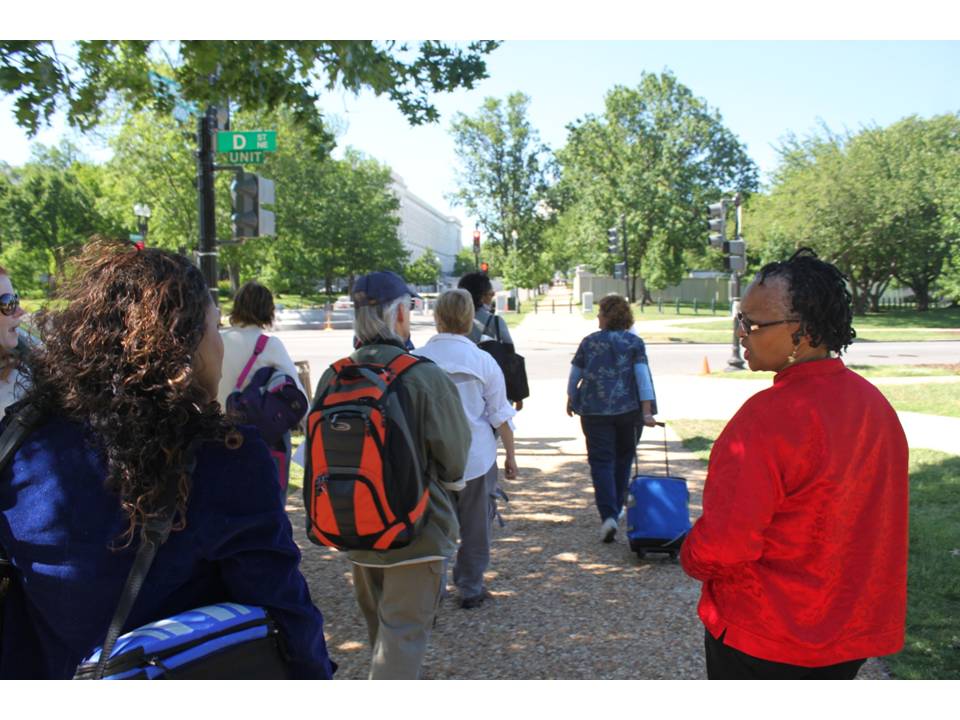
Collette M. Hopkins, Ph.D. (red jacket) guiding us toward our destination...the Smithsonian museum complex.  Museums, museums, and more museums!


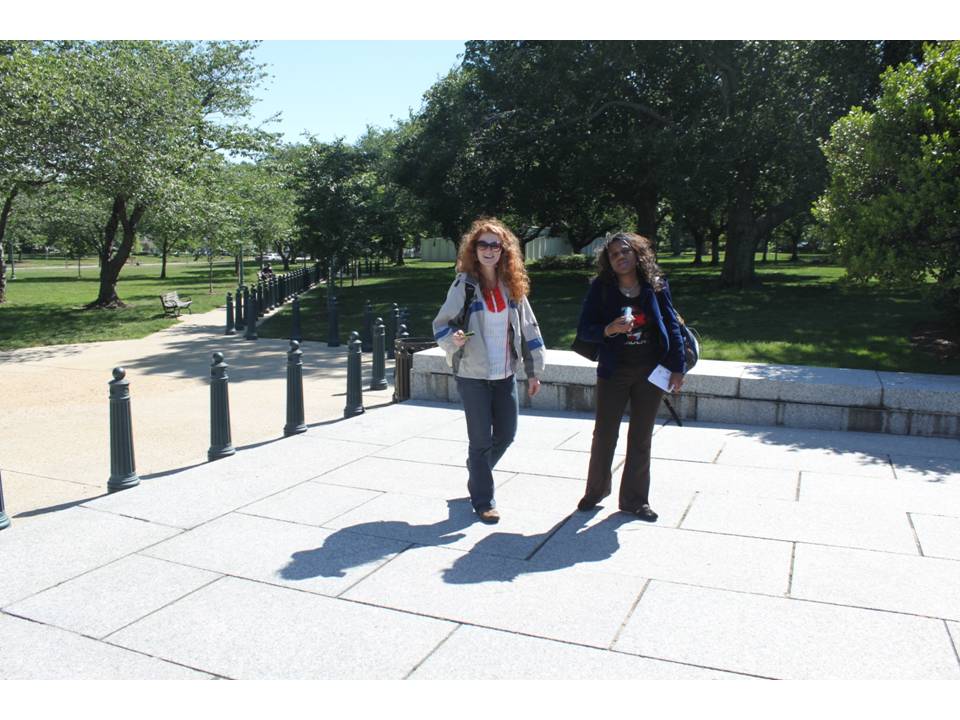
Two fellow colleagues and their shadows.


Phil Filming.


Two fountains.  One for water.  One for freedom.


Still en-route to Smithsonian museum haven.  M. Mensah taking a shot of the capital dome and building.


Steps up to The Tower inside the National Gallery of Art - East Building.


Collette M. Hopkins, Ph. D. relaxing in the sculpture garden near the Hirshhorn Museum.


Inside the National Gallery of Art - East Building.  The room leading to the Tower.


Mounted police parading across the National Mall.


Person in Window.  National Portrait Gallery.


Amazing View.  National Gallery of Art - West Building.


Cissy and Pat on the National Mall.


National Portrait Gallery.
Cannot remember the artist.  Help me out.  I believe she also has one at the High Museum of Art.


Cissy. Menash, and Pat in the Sculpture Garden near the Hirshhorn Museum.


Tour Bus.  Not for me.  Perhaps another time.


Phil with the backpack.  Can't remember the other two.  Do you?


Great Hall...Spectacular History.  National Portrait Gallery.
1865 On March 6, President Abraham Lincoln held his second inaugural ball on this floor of the building.  
See the History of this building: 


Walking to the Amtrak station.  Me in the reflection taking a quick mirror shot of our walking group.